Therapy intake form: free template for therapists and counselors
Last updated: October 2026 · Clinical review: pending
A therapy intake form collects the essentials from a new client before the first session: who they are, why they are seeking therapy, relevant history, and what they hope to achieve. Use our free template as a starting point and adapt it to your practice.
Get your therapy intake form by email
We personalise it with your practice details and email you a fillable PDF and an editable Word file (US Letter or A4).
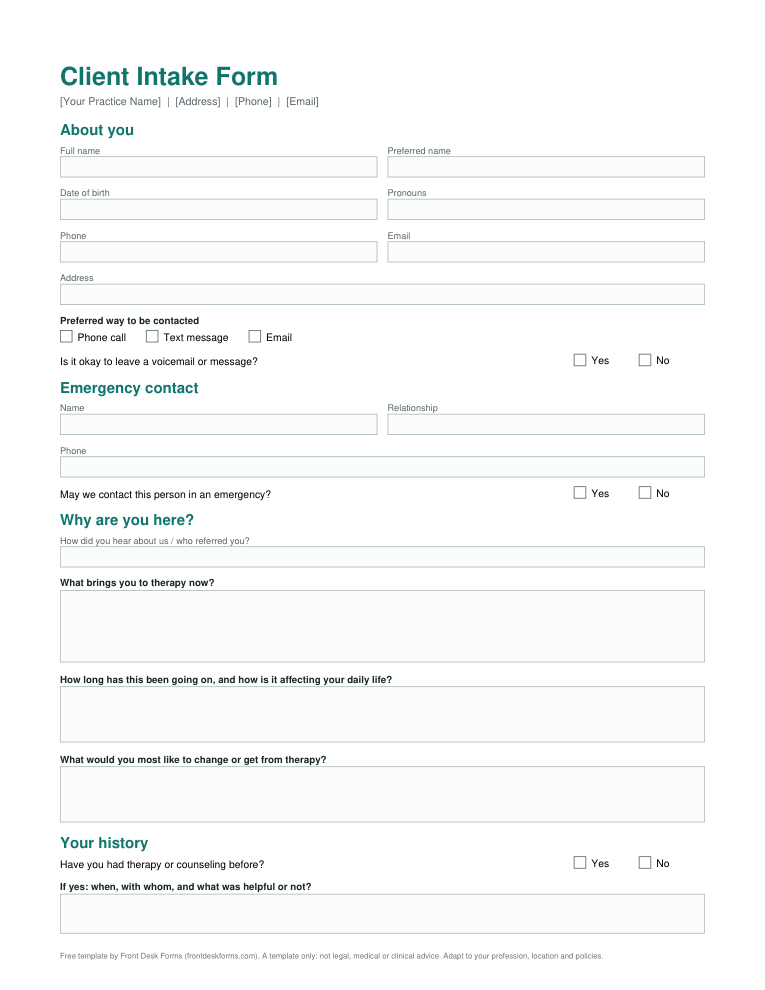
What a therapy intake form should include
- Client details: name, contact information, date of birth, preferred pronouns and contact preferences.
- Emergency contact and, where relevant, a referring professional.
- Reason for seeking therapy: what brought the client in and what they would like help with.
- Mental health history: previous therapy, diagnoses the client chooses to share, and current symptoms.
- Medical history and medications relevant to treatment.
- Safety and risk questions, worded and handled according to your professional standards.
- Life context: work, relationships, living situation, supports, substance use.
- Goals for therapy in the client's own words.
- Payment and insurance details, if you take insurance.
- Consent and confidentiality acknowledgement with signature and date.
Requirements differ by profession, licence and location. Adapt the form to your board's rules and your own clinical judgement.
How to use this template
- Download the editable file and save a master copy.
- Add your practice details: name, logo, contact information and policies you refer to.
- Remove or add sections to match your modality and client group.
- Send before the first session or complete it together, whichever suits your practice.
- Store completed forms securely and keep access limited to people who need it.
Intake form or informed consent form?
They do different jobs. The intake form gathers information about the client. The informed consent form explains how therapy works, fees, confidentiality and its limits, and records agreement. Many practices use both at the start. See the other therapist forms as we add them.
Free template or full bundle?
| Free intake form | Complete therapist bundle | |
|---|---|---|
| Client intake form | Included | Included, with adult, teen, child and couples versions |
| Informed consent | Not included | Included |
| Session notes (SOAP / BIRP) | Not included | Included |
| Treatment plan and policies | Not included | Included |
| Formats | One editable file | Several editable formats |
Get your personalised copy
Answer a few quick questions about your practice and we will email you the finished form.
Frequently asked questions
What is a therapy intake form?
A therapy intake form is the paperwork a new client completes before or at the first session. It collects contact details, presenting concerns, relevant history, goals and the acknowledgements a practice needs, such as consent to treatment and confidentiality information.
What should a therapy intake form include?
Most practices include client and emergency contact details, reason for seeking therapy, mental health and medical history, current medications, safety questions, support network, goals for therapy, payment and insurance information, and signed consent and confidentiality acknowledgements. Requirements vary by profession and location, so check your licensing board.
Is a downloadable intake form HIPAA compliant?
A template alone is not a compliant system. Compliance depends on how you store, share and protect completed forms. Use secure storage and follow the rules that apply to your practice and location.
Can I edit the form and add my logo?
Yes. The free template is designed to be edited: add your practice name, logo and contact details, remove sections you do not need, and print or share it.
What is the difference between an intake form and an informed consent form?
The intake form collects information about the client. The informed consent form explains what therapy involves, fees, confidentiality and its limits, and records the client agreeing to proceed. Many practices give both at the start of treatment.